Dominance
Direct, results-driven and decisive. A competitive problem solver.
 ACTIONTEAMS
DISC Workshop
DISC gives teams a shared language to understand communication styles, working preferences and interpersonal dynamics.
DISC is a practical team development framework that helps people understand how different colleagues prefer to communicate, decide, respond to pressure and build working relationships.
D stands for Dominance, I stands for Influence, S stands for Steadiness, and C stands for Conscientiousness. The workshop can help participants understand their preferred social style, appreciate differences in colleagues, communicate more effectively and apply the learning back to workplace collaboration.
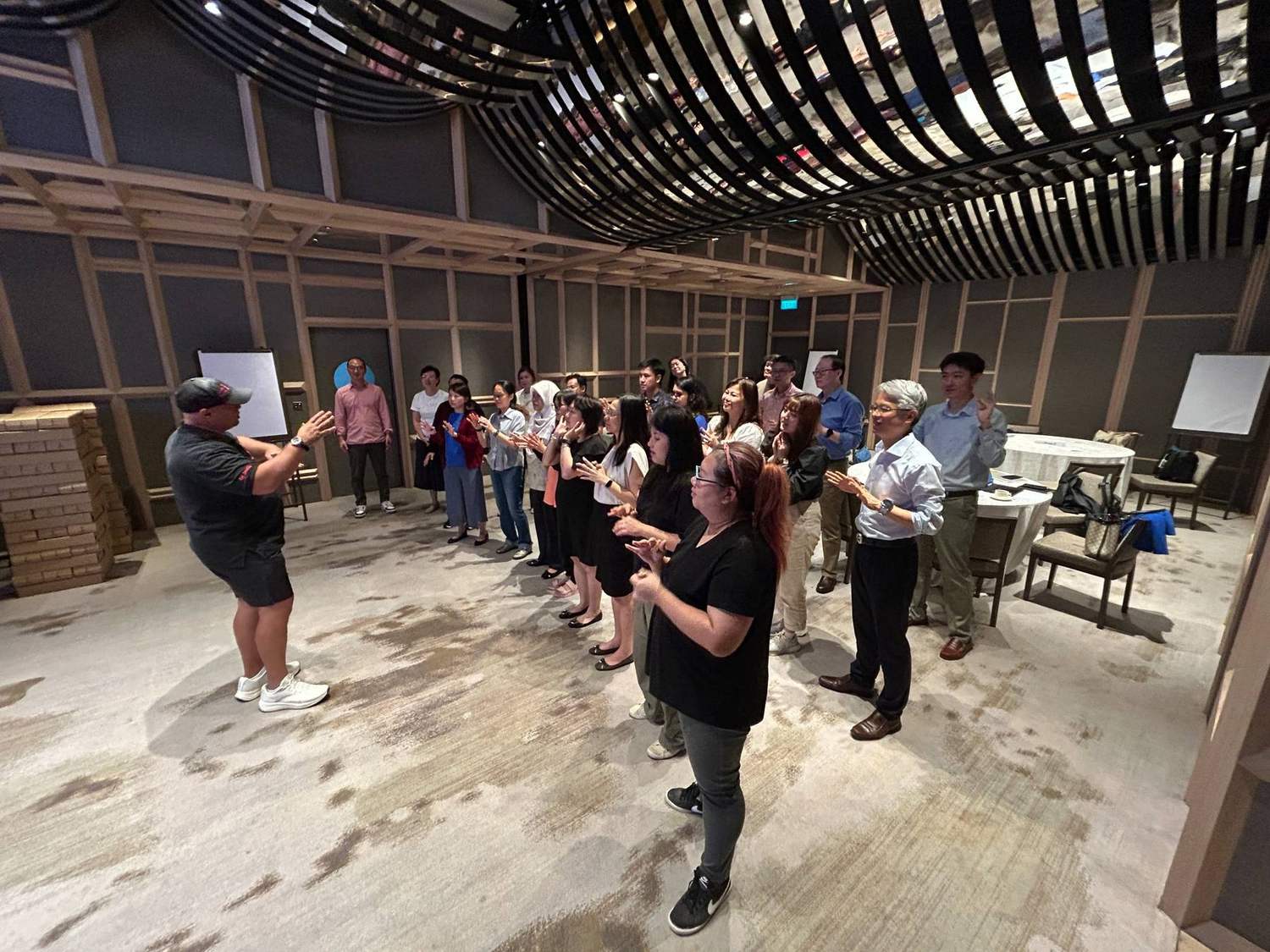
Self-awareness is the starting point for real progress. Without understanding what drives your own actions and reactions, it's hard to build on your strengths or move past the habits that hold you back. A DISC profile helps participants see this clearly — surfacing the traits that push them forward, and the tendencies that quietly get in the way.
Through a facilitated DISC session, participants receive a practical picture of their working style, showing how to draw on different parts of their personality to work and communicate more effectively. DISC is useful for anyone who wants a clearer picture of how they operate, and it often brings unspoken assumptions or limiting habits into the open — the first step to changing them.
While individuals gain value from understanding their own profile, DISC is most powerful in a team setting. It gives colleagues a shared, judgement-free language for talking about behaviour and communication style — one that makes it easier to understand not just yourself, but the people you work with every day.
Developed by psychologist William Moulton Marston, DISC looks at how a person ranks across four primary behavioural styles — dominance, influence, steadiness and conscientiousness.
Everyone carries all four traits, but the balance is different for each person. No DISC style is inherently better or worse than another. The assessment is straightforward and non-judgmental, and it helps participants understand how they respond to conflict, work through problems and recognise the habits and working styles that come naturally to them.
DISC is used widely — by individuals who want to understand and build on their own strengths, and by organisations that want to build stronger, higher-performing teams. In a workshop setting, it gives colleagues a common reference point for talking about how they each prefer to communicate and work.
Direct, results-driven and decisive. A competitive problem solver.
Charming, enthusiastic and optimistic. Persuasive and inspiring.
Understanding and patient. A stable, sincere team player.
Analytical and precise. Diplomatic and objective.
DISC is one of the most widely used frameworks in the workplace, and for good reason — it offers real, practical benefits for individuals and teams alike.
DISC is one of the most widely used frameworks in the workplace, and for good reason — it offers real, practical benefits for individuals and teams alike.
Self-awareness
You can't build on your strengths or work on your weaknesses if you don't know what they are. DISC sharpens self-awareness — the ability to see yourself clearly and honestly — which is the starting point for growth at work and beyond.
Communication
If self-awareness is the foundation of personal growth, communication is the foundation of strong teams. Being able to name a challenge, raise it clearly and work through it together is what makes teamwork actually work.
Conflict resolution
Once you understand how each person on the team communicates, it's easier to see where friction is likely to show up — and to get to the real cause of it faster when it does.
Teamwork
Better communication and faster conflict resolution add up to stronger, more connected teams. Colleagues understand themselves and each other better, and see how their strengths complement one another.
Leadership
Great leadership depends on communicating clearly, building rapport and influencing others — none of which is possible without first understanding yourself and the people around you.
Customer service
DISC is especially valuable for sales and service teams, who deal with a wide range of personalities every day. Understanding their own style alongside their customer's helps build a genuine connection.
DISC is most useful when it becomes part of a real team conversation. The workshop gives participants a shared language, while facilitation helps the group apply that language to practical workplace situations.
For teams that need more than an activity-based event, DISC can support deeper reflection around leadership, working preferences and interpersonal dynamics.
Useful answers
DISC profiling helps participants understand behavioural and communication styles so they can work more effectively with different colleagues.
Raj Sandhu, Principal Facilitator and Founder of Action Teams, is a trained DISC exponent and Certified Behavioral Consultant.
DISC is a learning-driven team development workshop. It supports communication, leadership, interpersonal awareness and stronger working relationships.
Plan your event
Tell us your group size, objectives and preferred date. Action Teams will recommend suitable in-person activities for your team.